
Introduction
This problem messes with your head more than any other plant issue.
You water the plant.
You check the soil.
It’s wet.
And still… the plant is wilting.
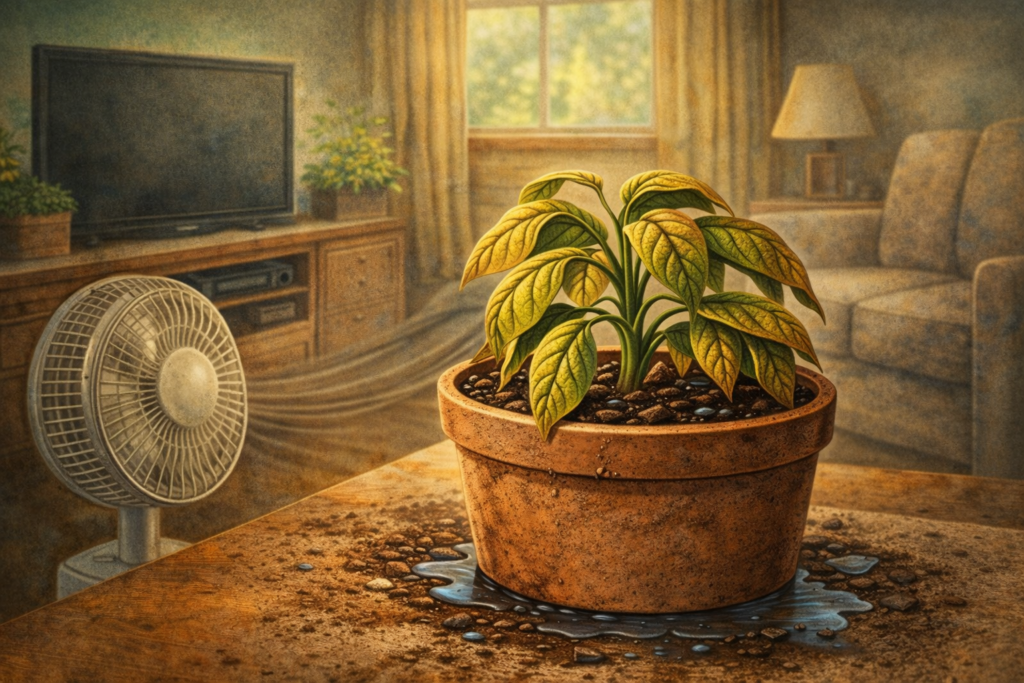
Leaves hanging low. Stems looking tired. The plant looks thirsty, but you just gave it water.
I remember standing in my living room one afternoon, staring at a plant near the TV unit. Fan on. Curtains half open. The soil was clearly wet. I even touched it again to be sure. Still, the leaves were drooping like they had given up.
That moment makes you doubt yourself. You start thinking, “Am I really this bad with plants?”
You’re not.
Wilting after watering is one of the most misunderstood problems with living room indoor plants. And most of the time, watering is not the real issue at all.
In modern homes, especially now in 2026, plants live very controlled lives. AC air. Limited sunlight. Closed windows. Decorative pots. All these things affect how a plant drinks water and uses it.
If you’re growing the best indoor plants and still seeing wilting, this blog is for you. I’m going to walk you through the real reasons. Not textbook reasons. Real, lived-in reasons.
Slowly. Honestly. One by one.
Living Room Indoor Plants and Root Suffocation from Too Much Water
This is the biggest reason plants wilt after watering.
It sounds backward, but hear me out.
I learned this after losing a plant I truly liked. I watered it well, thinking I was helping. But the pot stayed heavy for days. The soil never really dried. And slowly, the plant started wilting more.
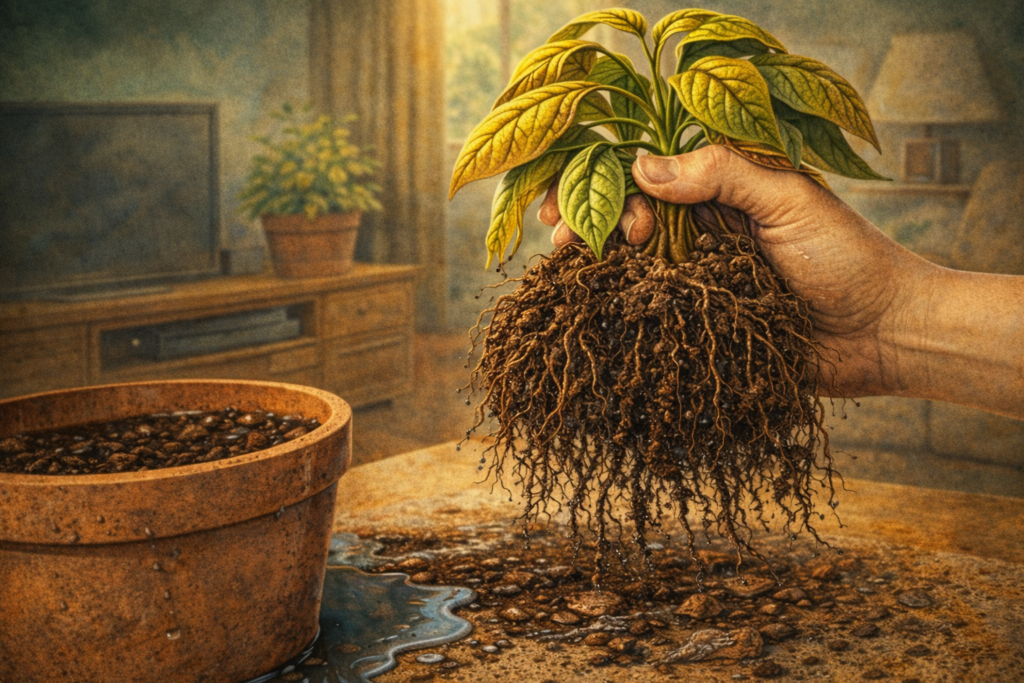
Roots need air. Not just water.
In living room indoor plants, water doesn’t evaporate quickly. Air doesn’t move much. So when soil stays wet, roots suffocate.
What suffocated roots do:
- They stop absorbing water
- They stop sending strength to leaves
- The plant wilts even though soil is wet
Signs this is happening:
- Soil smells slightly bad
- Pot feels heavy all the time
- Leaves droop but don’t feel dry
What helped me:
- Letting soil dry properly before watering
- Using lighter soil
- Reducing watering frequency
Common mistake:
People water again because wilting looks like thirst.
This is one of the most common indoor plants care mistakes.
Living Room Indoor Plants and Poor Drainage That Traps Water
Drainage problems cause silent damage.
I once used a beautiful ceramic pot with no holes. Looked great in the living room. Disaster for the plant.
Water had nowhere to go. It sat at the bottom. Roots stayed wet even when the top soil looked fine.
Living room indoor plants suffer badly in pots without drainage.
Signs drainage is the issue:
- Soil stays wet at the bottom
- Wilting after watering
- No new growth
Fixes that worked:
- Always using pots with holes
- Emptying trays after watering
- Avoiding decorative pots without inner plastic pots
If water can’t leave the pot, roots can’t breathe.
Living Room Indoor Plants and Compacted Old Soil
Soil can choke roots too.
I once pulled a plant out during repotting and saw the soil had turned into a hard lump. No air pockets. No softness.
Old, compacted soil holds water but doesn’t release air.
Living room indoor plants depend fully on soil structure. When soil gets dense:
- Water sits too long
- Roots struggle
- Leaves wilt
Signs soil is the problem:
- Water runs slowly or not at all
- Soil feels heavy even when dry
- Plant never perks up
What helped:
- Mixing lighter soil
- Repotting every 1–2 years
- Loosening soil gently
Fresh soil feels different in your hands. Lighter. Cooler. Alive.
Living Room Indoor Plants and Root Damage You Can’t See
Sometimes the damage is already done.
I’ve had plants where roots were partially rotten, but leaves were still green. Watering them made wilting worse.
Damaged roots can’t absorb water. So watering doesn’t help. It hurts.
Signs root damage is present:
- Wilting even after correct watering
- No response to care changes
- Soil smells sour
What I did:
- Removed the plant carefully
- Trimmed damaged roots
- Repotted in fresh soil
This step feels scary, but it saved more than one plant for me.
Living Room Indoor Plants and Sudden Temperature Changes
Plants feel temperature shifts faster than we do.
I once placed a plant near an AC vent. Every time the AC turned on, cold air hit it directly. The plant wilted daily, even after watering.
Living room indoor plants hate sudden temperature changes.
Signs temperature stress is the issue:
- Wilting at certain times of day
- Leaves curling slightly
- Soil moisture normal
Fix:
- Move plants away from AC or heaters
- Avoid placing near doors
- Keep temperature steady
Plants like stability more than comfort.
Living Room Indoor Plants and Light Stress Confusing the Plant
Light affects how plants use water.
I had a plant in low light that wilted constantly. The soil stayed wet, but the plant couldn’t use the water properly.
Living room indoor plants in low light:
- Drink less water
- Grow slower
- Wilt easily if overwatered
What helped:
- Moving the plant closer to light
- Reducing watering
- Rotating the pot
Light and water work together. One without the other causes problems.
Living Room Indoor Plants and Overfeeding Stress
Feeding a stressed plant is a mistake.
I once fertilized a wilting plant thinking it needed strength. Instead, it wilted more.
Fertilizer stresses roots when they’re already struggling.
Signs this is the issue:
- Wilting after feeding
- Brown edges along with drooping
- No recovery
Rule I follow now:
Never fertilize a wilting plant.
Fix water, roots, light first.
Living Room Indoor Plants and Watering Technique Problems
Sometimes it’s not how much you water. It’s how.
I used to pour water quickly and leave. Water ran through gaps and missed roots.
Proper watering means:
- Slow watering
- Even soaking
- Letting excess drain
Living room indoor plants need time to absorb water.
Rushed watering causes uneven moisture and stress.
Living Room Indoor Plants and Stress from Frequent Movement
Plants don’t like being moved often.
I once shifted a plant three times in one week trying to “find the right spot.” It wilted badly.
Each move changes:
- Light
- Air
- Temperature
Give plants time to settle.
Choose a spot. Observe. Adjust slowly.
FAQ
Why do plants wilt even when soil is wet?
Because roots may be suffocating or damaged.
Should I water a wilting plant again?
No. Check soil and roots first.
Can a wilted plant recover?
Yes, if the root problem is fixed early.
Is wilting always due to water issues?
No. Light, temperature, and roots also matter.
Do living room indoor plants wilt more easily?
Yes, because indoor conditions are controlled and limited.
Conclusion
Wilting after watering feels confusing, but it’s actually a clear message.
Your plant is saying, “Something below the soil isn’t right.”
I’ve learned this the slow way. By watching. By failing. By fixing one thing at a time.
Living room indoor plants don’t want more water. They want balance.
If your plant is wilting, stop. Observe. Smell the soil. Feel the weight of the pot.
Change one thing. Give it time.
That’s how plants recover. Quietly.