
Introduction
Have you ever looked at your plant and thought, “You’re alive, but why aren’t you growing?”
Trust me, I’ve asked this question more times than I can count.
I remember one summer, my living room felt perfect. Soft sunlight in the morning, curtains open, floor clean, chai in my hand. My plant was green, no yellow leaves, no drooping. But weeks passed. Nothing changed. No new leaf. No height. Just… stuck.
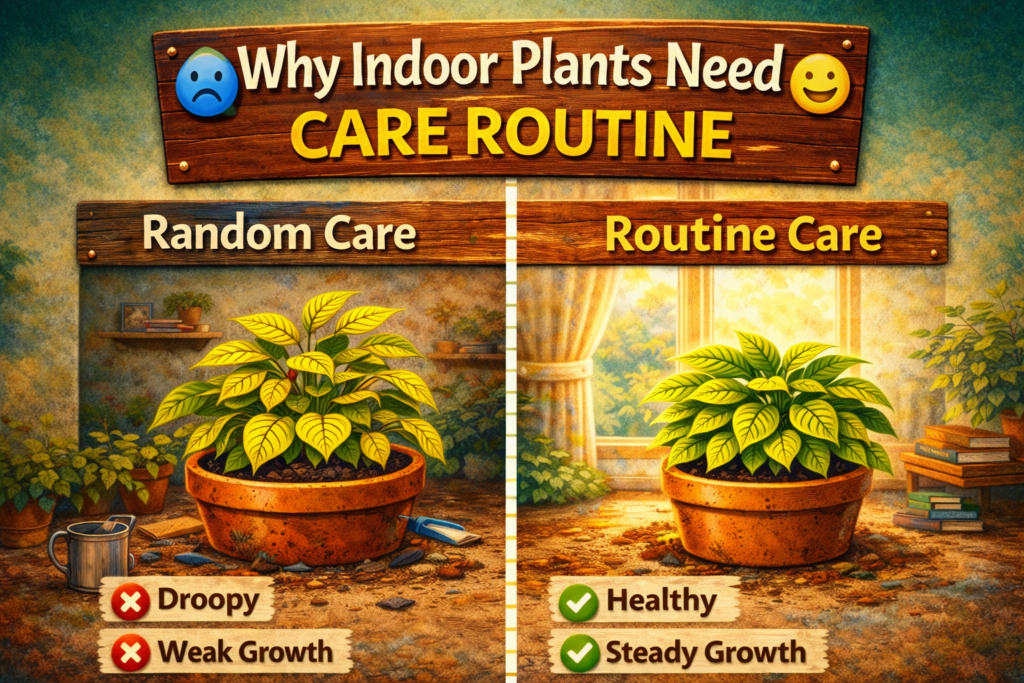
Most people think if a plant is not dying, it must be fine. That’s the biggest mistake. Plants don’t shout. They whisper. And when indoor plants stop growing, they are whispering that something is off.
In 2026, green homes and simple living are everywhere. People want plants not just for looks, but for calm, for air, for peace. But indoor plants behave very differently from outdoor ones. Four walls change everything. Light, air, water, even silence.
Many beginners blame themselves. “I’m bad with plants.” Honestly, that’s not true. Most problems come from small daily habits we don’t even notice. A window that gets blocked. A pot that never dries. A plant that hasn’t been touched in months.
In this post, I’ll talk like a friend, not like a teacher. I’ll share mistakes I’ve made in my own living room. You’ll learn why your plant looks fine but refuses to grow, and what you can gently change.
If you’ve tried growing the best indoor plants and still feel stuck, don’t worry. Let’s slowly figure this out together.
Living Room Indoor Plants and Light Problems Nobody Notices
The first thing I always check is light. Not “is there light,” but what kind of light.
Years ago, I placed a plant right in the middle of my living room. The room was bright, or so I thought. White walls, big window, sunlight during the day. But the plant didn’t move. No new leaves for months.
One morning, I sat on the floor at plant level. That’s when I noticed it. The sunlight never actually touched the leaves. It stopped at the sofa.
Living room indoor plants need light that reaches their leaves, not just the room.
Common light mistakes I see:
- Keeping plants too far from windows
- Using thick curtains all day
- Assuming tube lights are enough
- Never rotating the pot
What helped me:
- I moved the plant closer to the window, just a few steps.
- I turned the pot every week so all sides got light.
- I opened curtains fully for at least a few hours.
Pros of fixing light:
- New leaves start showing
- Plants look more fresh
- Growth feels natural
Cons if ignored:
- Slow growth
- Small leaves
- Weak stems
If you like plants that survive low light, you can also check out my post on snake plant care.
Living Room Indoor Plants and Overwatering Confusion
Overwatering is silent damage. No drama. No warning. Just slow sadness.
I once watered my plant every three days because the top soil looked dry. I thought I was caring. In reality, I was drowning it.
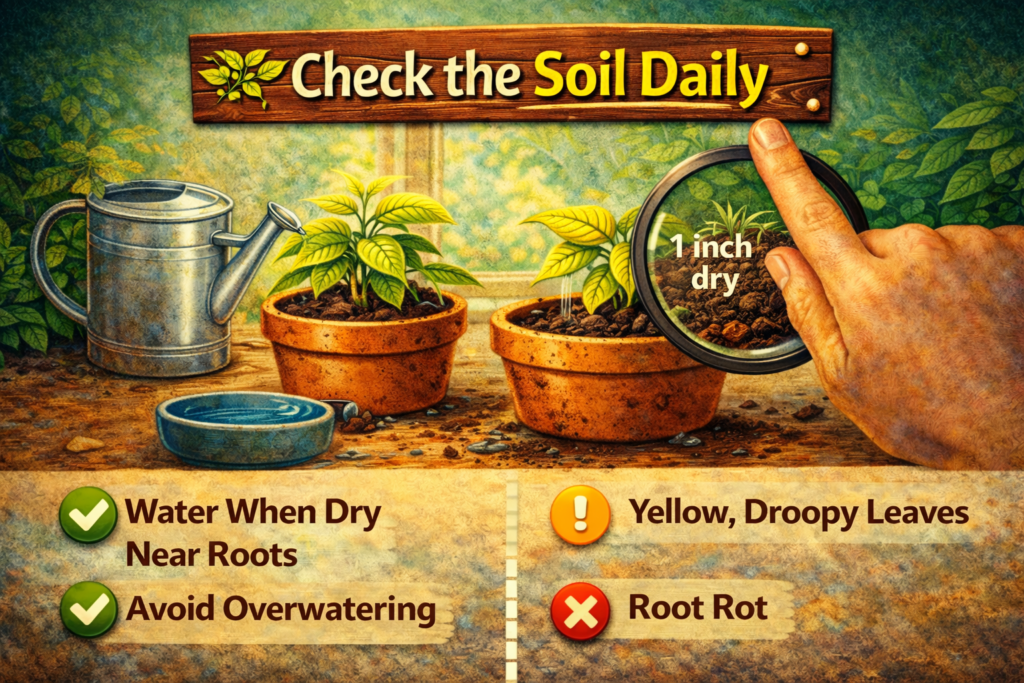
When I finally touched the soil deeper, it smelled bad. That wet, sour smell. The roots had no air.
Living room indoor plants don’t dry as fast as balcony plants. Air movement is low. Sun is softer. Soil stays wet longer.
Signs you’re overwatering:
- Soil always dark and heavy
- No new growth
- Leaves feel soft, not crisp
- Tiny flies near the pot
What I changed:
- I waited until my finger felt dry two inches deep
- I watered slowly, not in a hurry
- I emptied the tray under the pot
Simple rule I follow now:
Water when the plant asks, not when the calendar says so.
Common mistake:
People water more when plants stop growing. That makes it worse.
Living Room Indoor Plants and Pot Size Issues
This one surprised me when I first learned it.
I had a beautiful pot. Big, heavy, stylish. I planted a small houseplant in it. Months passed. No growth. The plant looked confused.
Turns out, living room indoor plants can struggle in pots that are too big.
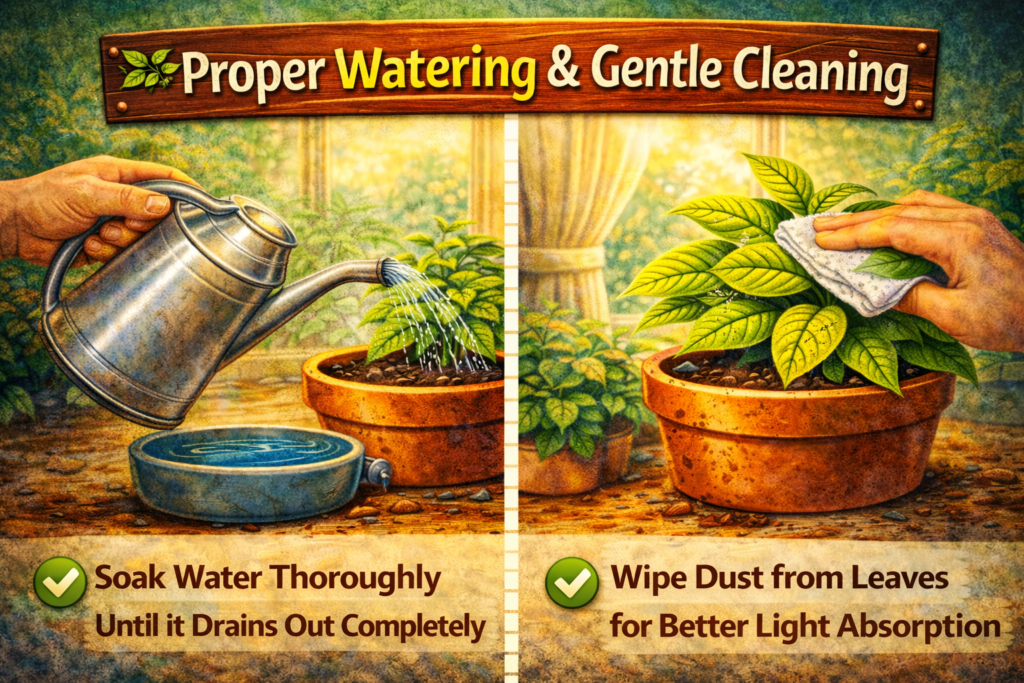
When the pot is large:
- Soil holds water for too long
- Roots don’t know where to grow
- Energy goes into survival, not growth
When I repotted into a smaller pot, something magical happened. New leaves appeared within weeks.
Pot size tips:
- Roots should lightly touch the sides
- Too tight is bad, too loose is worse
- Drainage holes are non-negotiable
Pros of right pot size:
- Better root health
- Faster growth
- Easier indoor plants care
Living Room Indoor Plants and Poor Air Movement
Plants breathe. We forget that.
My living room stays closed most of the day. AC on. Windows shut. Quiet air. Great for naps. Bad for plants.
Living room indoor plants suffer when air never moves.
I noticed dust settling on leaves. When I wiped them, the leaf surface felt sticky. That layer blocks light and breathing.
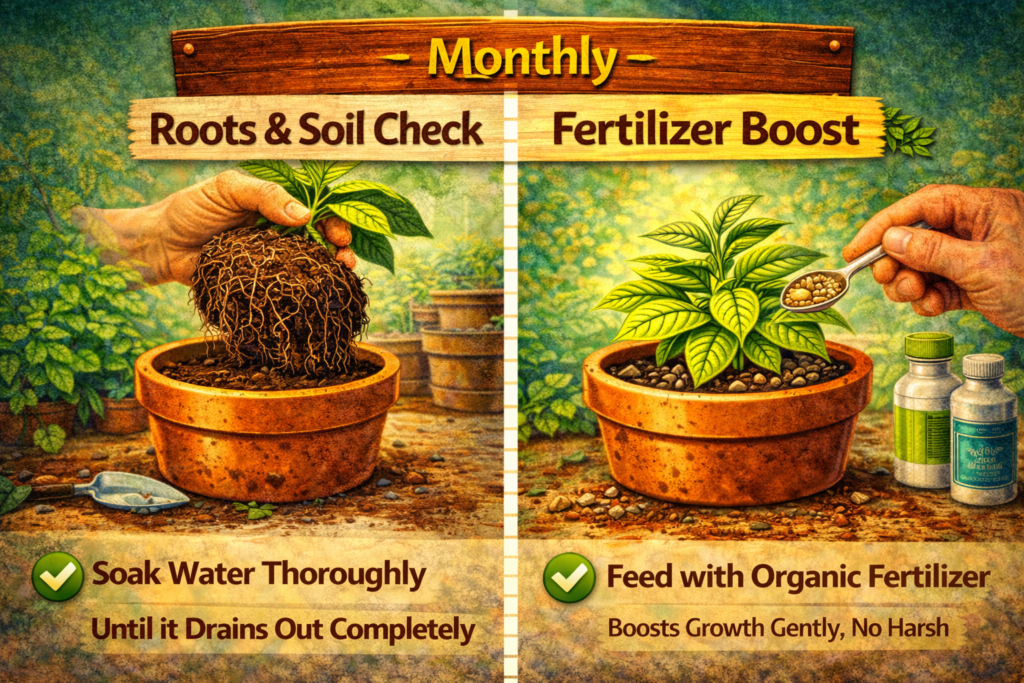
What helped:
- Opening windows for 20 minutes daily
- Gently wiping leaves with a damp cloth
- Not placing plants right under AC vents
Signs air is the problem:
- Growth stops suddenly
- Leaves look dull
- Soil dries unevenly
You don’t need a fan. Just a little fresh air.
Living Room Indoor Plants and Soil That’s Too Tired
Soil gets old. We don’t talk about this enough.
I once kept a plant in the same soil for three years. Watered it, cleaned leaves, talked to it. Still, no growth.
The soil had turned lifeless. No smell. No fluff. Just mud.
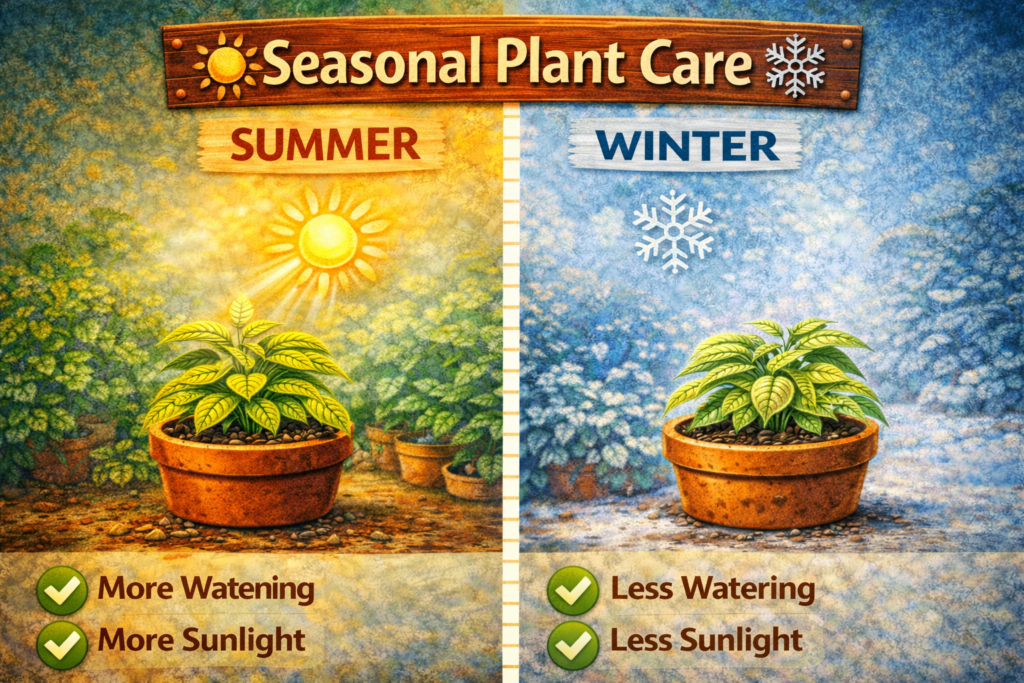
Living room indoor plants depend fully on us for nutrients. There’s no rain, no worms, no fresh matter.
Simple soil refresh:
- Change top soil every 6 months
- Repot fully every 1–2 years
- Use light, airy soil
Common mistake:
People add more water instead of fixing soil.
Fresh soil smells good. Earthy. That smell matters.
Living Room Indoor Plants and Root Problems You Can’t See
Sometimes the issue is hidden.
I had a plant that looked healthy but refused to grow. Finally, I checked the roots. They were circling, tight, almost choking each other.
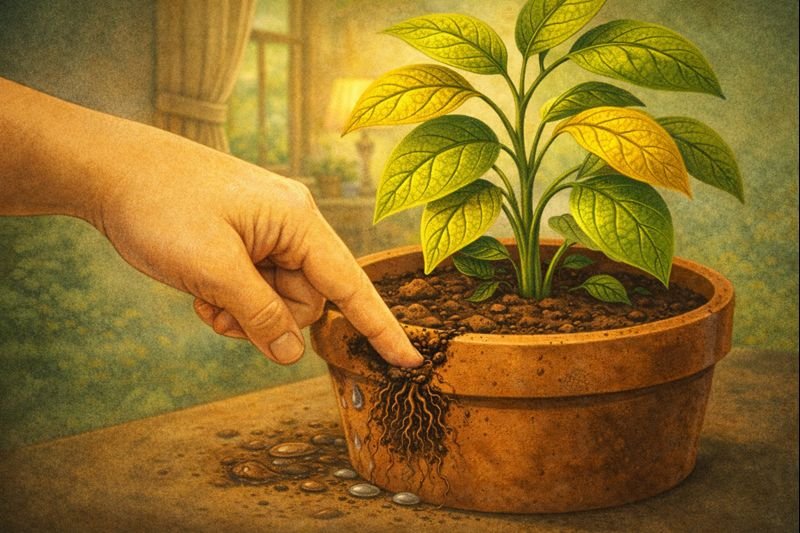
Living room indoor plants can become root-bound quietly.
Signs:
- Water runs straight through
- Plant dries too fast or too slow
- No growth despite care
Fix:
- Gently loosen roots during repotting
- Trim dead roots if needed
- Don’t be scared, be gentle
This alone revived one of my oldest houseplants.
Living Room Indoor Plants and Unreal Expectations
This part is honest.
Sometimes the plant is fine. We are impatient.
I used to measure growth weekly. Compare photos. Stress myself out. Plants don’t grow on our timeline.
Living room indoor plants grow slower than outdoor ones. That’s normal.
Healthy signs even without growth:
- Leaves stay green
- Stems are firm
- No dropping or yellowing
Growth comes in seasons. Rest is part of life.
FAQ
Why do indoor plants look healthy but don’t grow?
Because something small like light, roots, or soil is holding them back.
How long should indoor plants take to grow?
Slow growth is normal. Some plants grow only a few times a year.
Should I fertilize if my plant isn’t growing?
Only after fixing light, water, and soil.
Can living room indoor plants grow without sunlight?
They need some natural light. Artificial light alone is rarely enough.
Is repotting always needed for growth?
Not always, but old soil and tight roots can stop growth.
Conclusion
If your plant is not growing, don’t panic. Growth is a result, not a promise. Plants respond to balance, not effort.
I’ve learned this over years of mistakes. Too much care hurts more than gentle care. Sit with your plant. Watch it. Touch the soil. Notice the light. Listen.
Try changing just one thing this week. Move the pot. Skip one watering. Open a window.
Growing plants indoors is slow, quiet, and deeply calming. When growth finally comes, it feels earned.
If you’ve been struggling, you’re not bad at plants. You’re just still learning.