
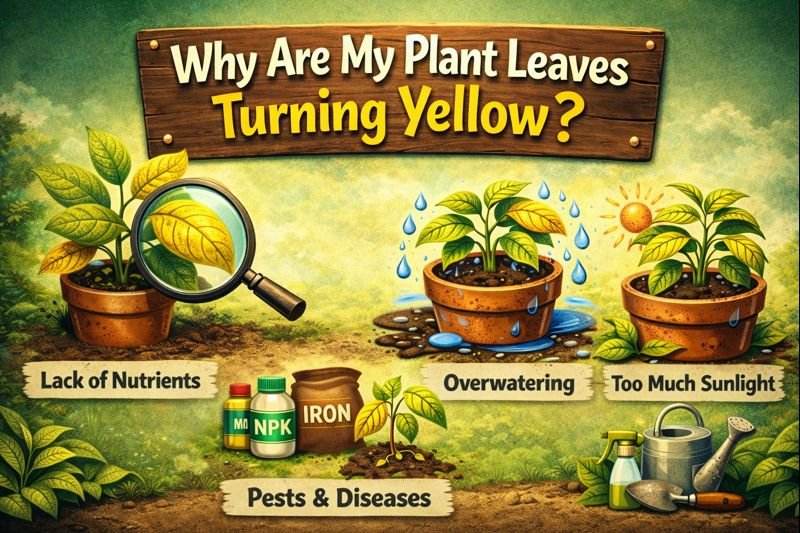
Simple Causes and Easy Fixes Anyone Can Understand
Introduction: When Your Happy Green Plant Suddenly Looks Sad
I still remember the first time this happened to me.
One morning, I looked at my indoor plant and felt something was wrong. The leaves that were green and fresh just a few days ago had started turning yellow. I honestly thought my plant was dying.
If you are feeling the same right now, take a deep breath.
- Yellow leaves are very common.
- Most of the time, they are easy to fix.
Plants cannot talk like us. So when something is wrong, they show it through their leaves. Yellow leaves are simply a sign that your plant is asking for help.
In this guide, I will explain everything in very simple English. There are no hard words and no confusing advice. You will learn why plant leaves turn yellow, how to fix the problem step by step, and how to stop it from happening again.
What Does It Mean When Plant Leaves Turn Yellow?
Healthy plants have green leaves. Green color means the plant is getting the right amount of water, light, and nutrients.
When leaves turn yellow, it usually means:
- The plant is stressed
- Something in its care routine is not right
- The plant is adjusting to a change
Yellow leaves are warning signs, not danger signs.
This means your plant is asking for help. Once you understand the reason, the problem is often easy to fix.
1. Overwatering – The Most Common Reason
Overwatering is the number one reason why plant leaves turn yellow.
Many people believe that giving more water will help plants grow faster. In reality, too much water can harm plants more than too little water.
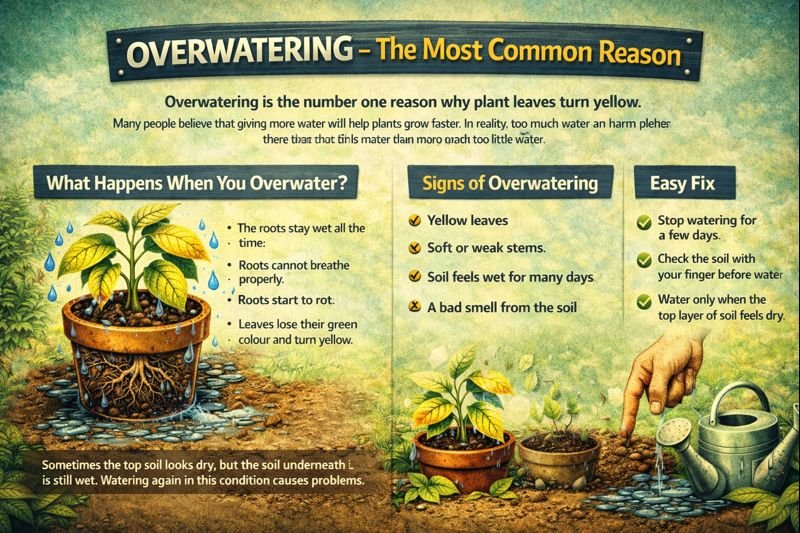
What Happens When You Overwater?
When a plant gets too much water:
- The roots stay wet all the time
- Roots cannot breathe properly
- Roots start to rot
- Leaves lose their green colour and turn yellow
Sometimes the top soil looks dry, but the soil underneath is still wet. Watering again in this condition causes problems.
Signs of Overwatering
- Yellow leaves
- Soft or weak stems
- Soil feels wet for many days
- A bad smell from the soil
Easy Fix
- Stop watering for a few days
- Check the soil with your finger before watering
- Water only when the top layer of soil feels dry
A simple rule to remember is this:
If soil sticks to your finger, wait before watering.
2. Underwatering – When Plants Do Not Get Enough Water
Just like overwatering, underwatering can also cause yellow leaves.
When a plant does not get enough water, it becomes weak and stressed.
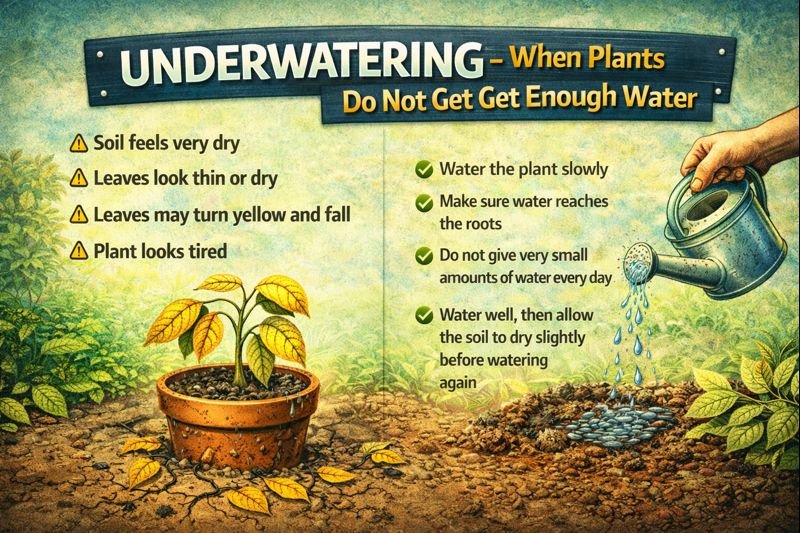
Signs of Underwatering
- Soil feels very dry
- Leaves look thin or dry
- Leaves may turn yellow and fall
- Plant looks tired
Easy Fix
- Water the plant slowly
- Make sure water reaches the roots
- Do not give very small amounts of water every day
Water well, then allow the soil to dry slightly before watering again.
3. Light Problems – Too Much or Too Little
Light is very important for plants. However, not all plants need the same amount of light.
Too Much Sun
- If a plant gets too much direct sunlight:
- Leaves may turn yellow or brown
- Leaf edges may look burnt
The plant looks stressed
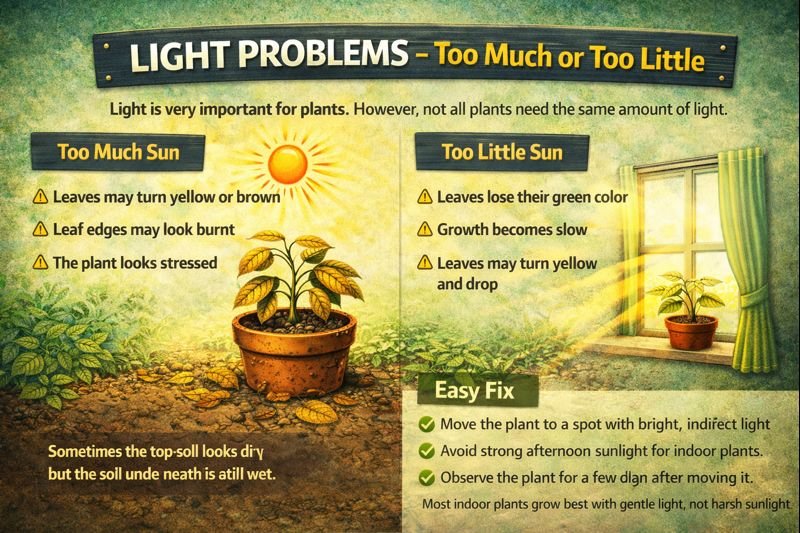
Too Little Sun
If a plant does not get enough light:
- Leaves lose their green color
- Growth becomes slow
- Leaves may turn yellow and drop
Easy Fix
- Move the plant to a spot with bright, indirect light
- Avoid strong afternoon sunlight for indoor plants
- Observe the plant for a few days after moving it
Most indoor plants grow best with gentle light, not harsh sunlight.
4. Poor Drainage – Water Has No Exit
Even if you water correctly, poor drainage can still cause yellow leaves.
What Is Poor Drainage?
- Poor drainage happens when:
- The pot has no drainage hole
- Water stays inside the pot
- Roots remain wet for too long
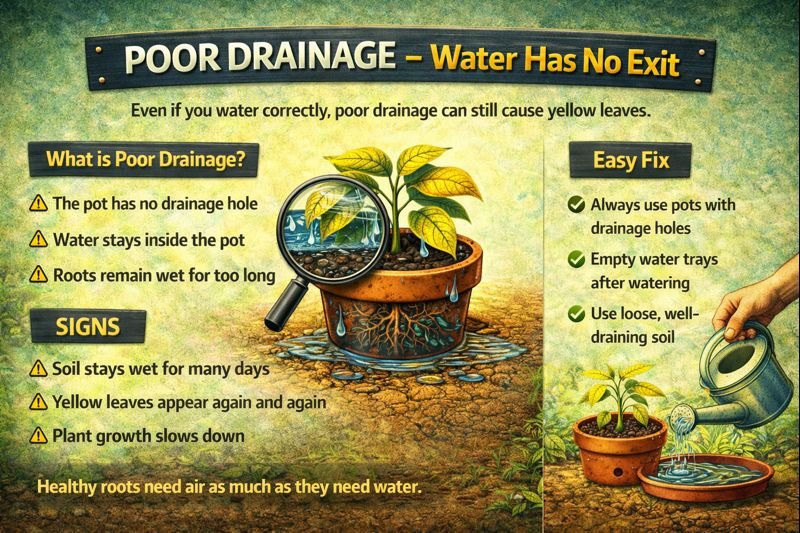
Signs
- Soil stays wet for many days
- Yellow leaves appear again and again
- Plant growth slows down
Easy Fix
- Always use pots with drainage holes
- Empty water trays after watering
- Use loose, well-draining soil
Healthy roots need air as much as they need water.
5. Lack of Nutrients – Your Plant Is Hungry
Plants need nutrients to stay green and healthy.
If soil lacks nutrients:
- Leaves may turn yellow
- Growth becomes slow
- Older leaves turn yellow first
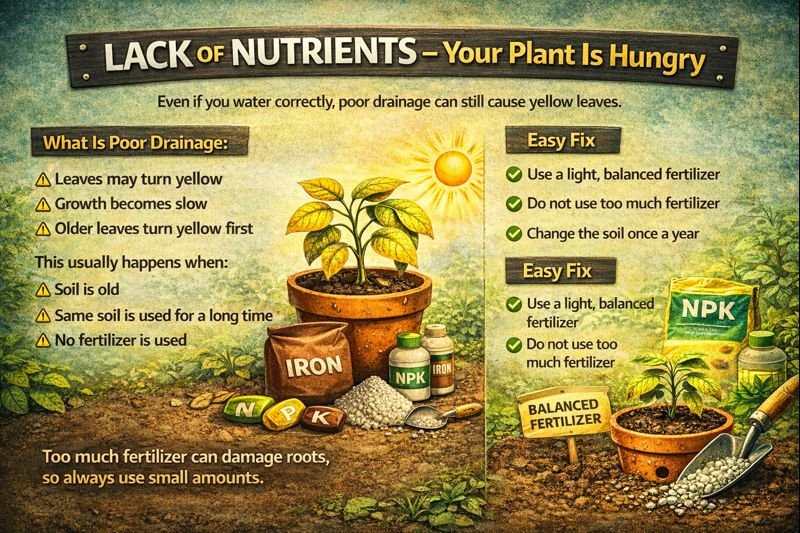
This usually happens when:
- Soil is old
- Same soil is used for a long time
- No fertilizer is used
Easy Fix
- Use a light, balanced fertilizer
- Do not use too much fertilizer
- Change the soil once a year
Too much fertilizer can damage roots, so always use small amounts.
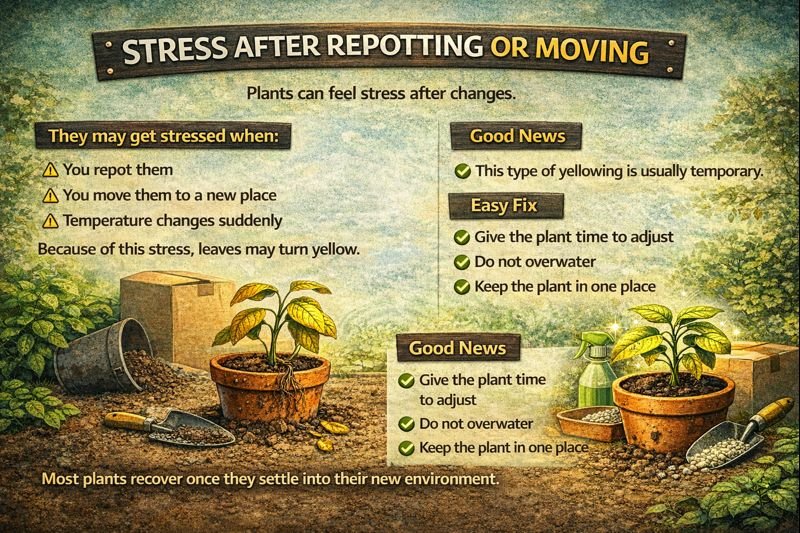
6. Stress After Repotting or Moving
Plants can feel stress after changes.
They may get stressed when:
- You repot them
- You move them to a new place
- Temperature changes suddenly
Because of this stress, leaves may turn yellow.
Good News
This type of yellowing is usually temporary.
Easy Fix
- Give the plant time to adjust
- Do not overwater
- Keep the plant in one place
Most plants recover once they settle into their new environment.
7. Natural Aging – Sometimes It Is Normal
Not all yellow leaves are a problem.
Sometimes, yellow leaves are part of the plant’s natural life cycle.
How to Know?
- Only the bottom leaves turn yellow
- New leaves are healthy and green
- Plant continues to grow
What to Do?
- Gently remove yellow leaves
- No treatment is needed
This is completely normal and not a cause for worry.
8. Pests – Small Bugs Can Cause Big Problems
Tiny insects can damage plant leaves and cause yellow spots.
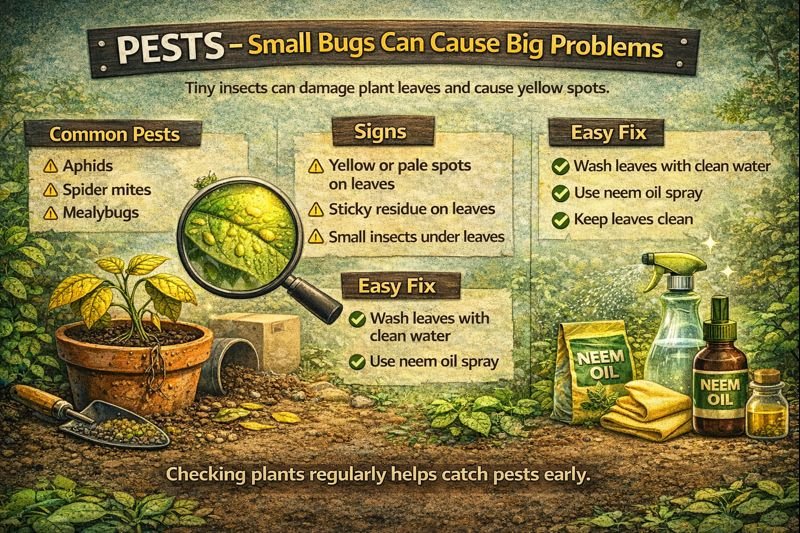
Common Pests
- Aphids
- Spider mites
- Mealybugs
Signs
- Yellow or pale spots on leaves
- Sticky residue on leaves
- Small insects under leaves
Easy Fix
- Wash leaves with clean water
- Use neem oil spray
- Keep leaves clean
Checking plants regularly helps catch pests early.
Simple Daily Habits to Prevent Yellow Leaves
Small daily habits can keep your plants healthy:
- Check soil before watering
- Use pots with drainage holes
- Give the right amount of light
- Clean plant leaves regularly
- Avoid moving plants often
Gardening does not need to be perfect. It only needs care and attention.
Frequently Asked Questions (FAQ)
Can yellow leaves turn green again?
Usually no. Focus on growing new, healthy leaves instead.
Should I cut yellow leaves?
Yes. Removing yellow leaves helps the plant save energy.
Is yellow leaf always a bad sign?
No. Sometimes it is natural or temporary.
Final Thoughts
Yellow leaves can look scary, especially when you care deeply about your plants. But in most cases, they are easy to understand and easy to fix.
Yellow leaves are simply your plant saying that something needs attention.
If you observe carefully, stay calm, and make small changes, your plant will recover.
Healthy plants come from simple care, not perfect care.