
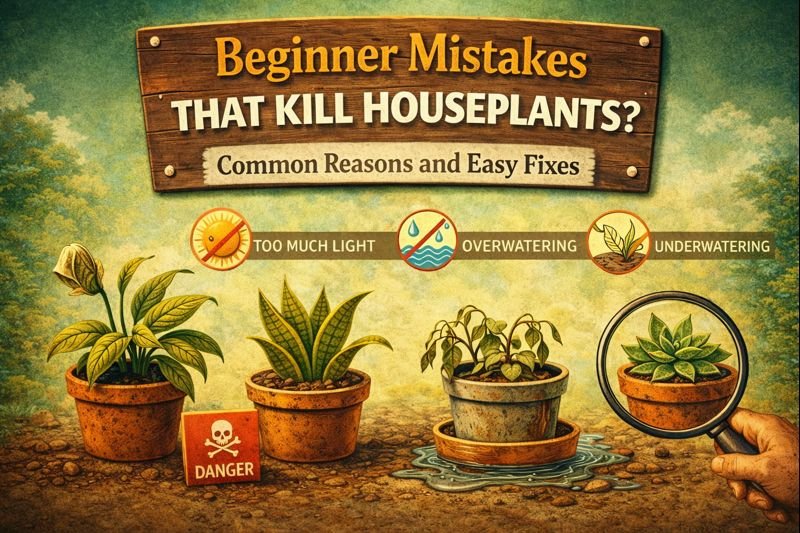
Introduction: When You Love Plants but They Still Die
Let me tell you something honestly.
Most people do not kill houseplants because they are careless.
They kill them because they care too much, or because no one ever explained plant care in a simple way.
I still remember my first indoor plants. I bought them with excitement, placed them carefully, watered them regularly, and checked them every day. I felt proud of myself.
But slowly, things started going wrong.
- Leaves turned yellow.
- Tips became brown.
- Growth stopped.
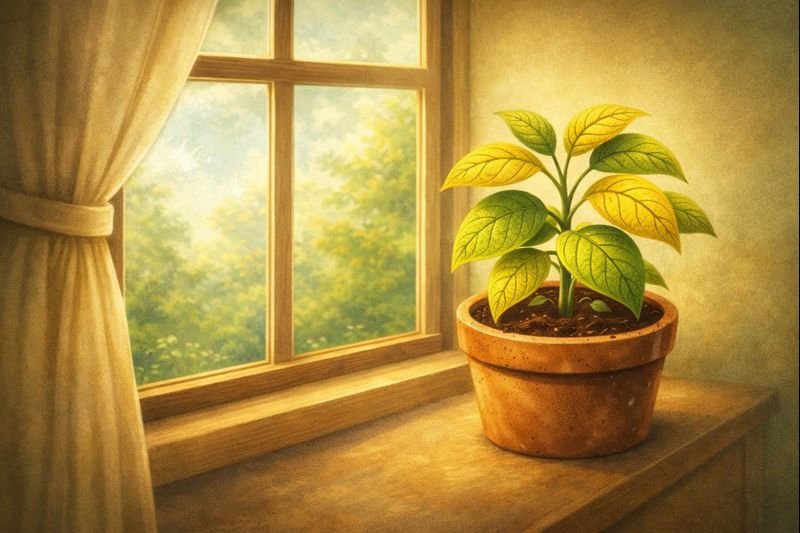
And one by one, those plants died. At that time, I felt disappointed and confused. I thought I was bad at gardening. Later, I learned an important truth:
Every good plant parent was once a beginner who made mistakes.
If you are struggling with houseplants, this article is for you.
I will walk you through the most common beginner mistakes that quietly kill houseplants, explained in very simple English, with understanding and care.
Why Beginners Lose Houseplants So Often
Houseplants look simple. They sit quietly and do not ask for much. That is why beginners often think plants need very little attention or follow random advice from the internet.
But plants are living beings. They respond to:
- Water
- Light
- Soil
- Temperature
- Consistency
When even one of these is misunderstood, plants slowly suffer.
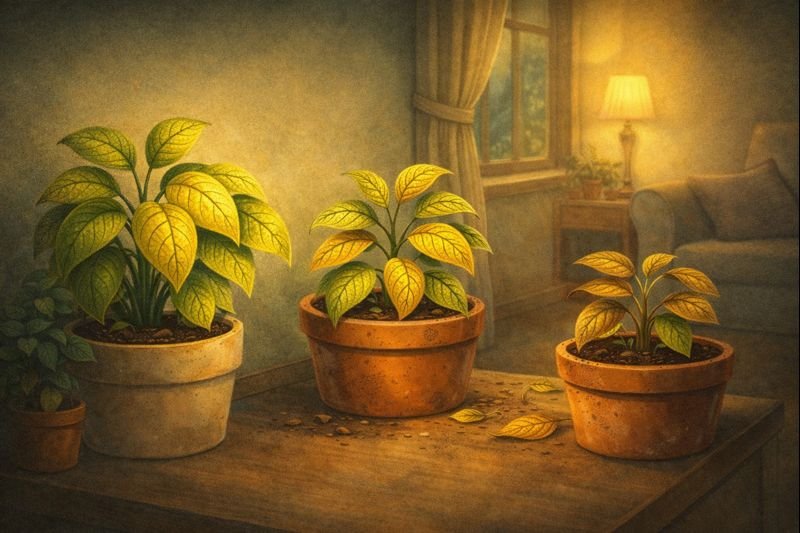
The sad part is that houseplants usually die slowly, not suddenly. By the time beginners notice something is wrong, the plant is already weak.
Understanding mistakes early can save many plants.
1. Overwatering – The Biggest Silent Plant Killer
Overwatering is the most common mistake beginners make.
Many people believe that watering more means caring more. But for plants, too much water can be worse than too little.
When you overwater:
- Roots stay wet all the time
- Roots cannot breathe
- Roots start rotting
The plant slowly becomes weak
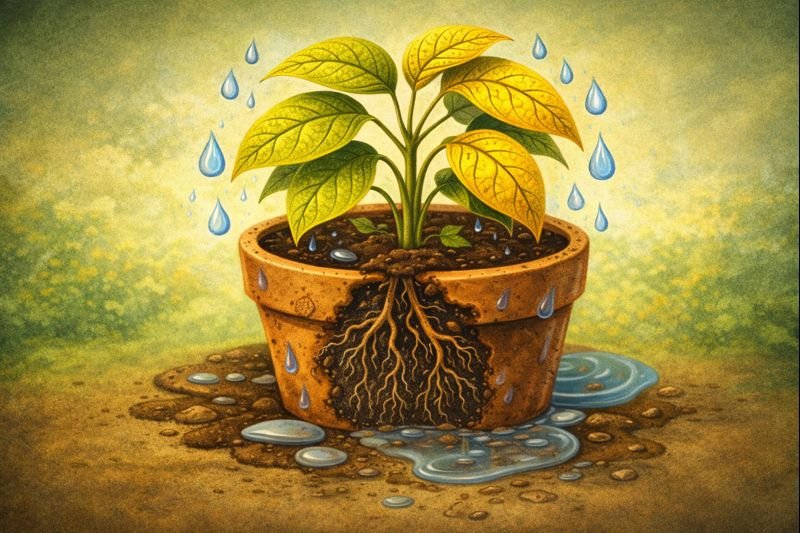
At first, the plant may still look fine. But damage is happening inside the pot.
Why This Happens Beginners often water plants daily because they want to do something for them. But plants need rest too.
Sometimes, not watering is the best care.
2. Watering on a Fixed Schedule
Many beginners follow a strict watering routine, such as:
- Water every Monday
- Water every three days
- Water once a week no matter what
Plants do not understand calendars.
They respond to:
- Soil moisture
- Temperature
- Light
- Season
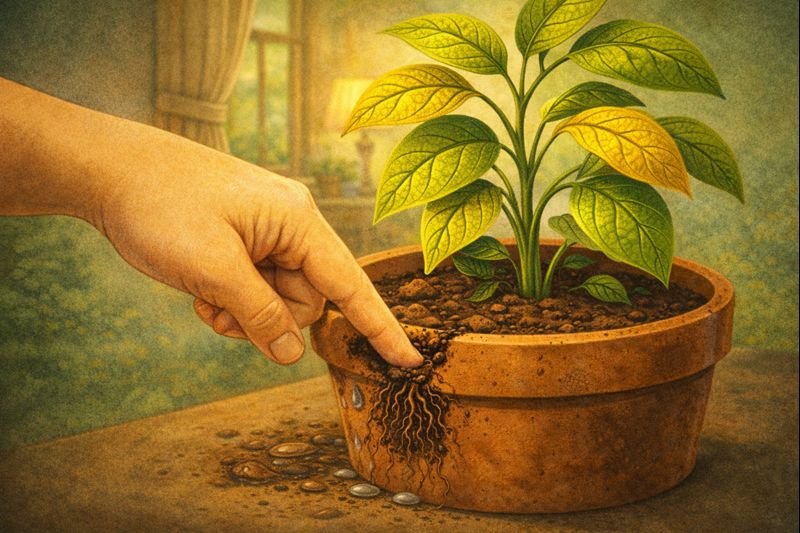
Watering on a fixed schedule often causes overwatering or underwatering.
Better Habit
Always check the soil before watering. Let the soil guide you, not the calendar.
3. Using Pots Without Drainage Holes
This mistake kills plants quietly.
When pots do not have drainage holes:
- Extra water has nowhere to go
- Roots sit in water
- Soil stays wet for too long
- Even if you water carefully, the plant can still suffer.
- Why Beginners Make This Mistake
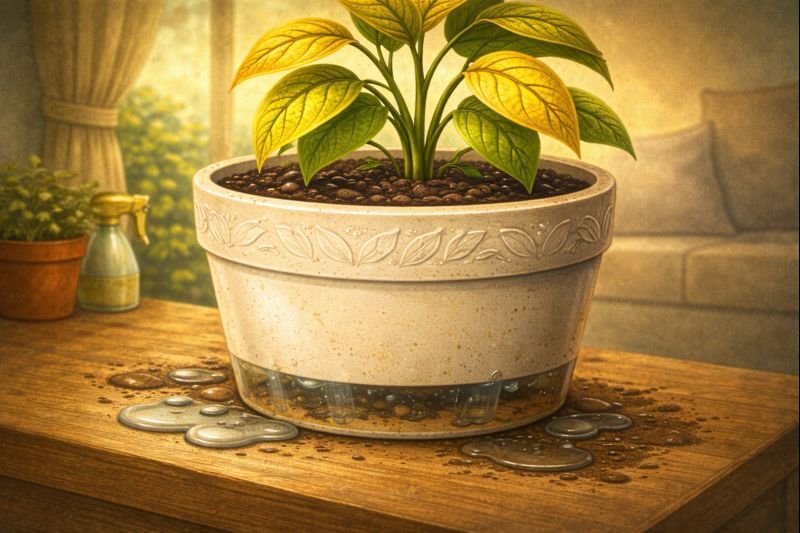
Decorative pots look beautiful. But beauty without function can harm plants.
Simple Rule
Always use pots with drainage holes, or place the plant in a plastic pot inside a decorative one.
4. Keeping Plants in the Wrong Light
Light is food for plants.
But beginners often:
- Keep plants in dark corners
- Place them in harsh direct sunlight
- Never move them
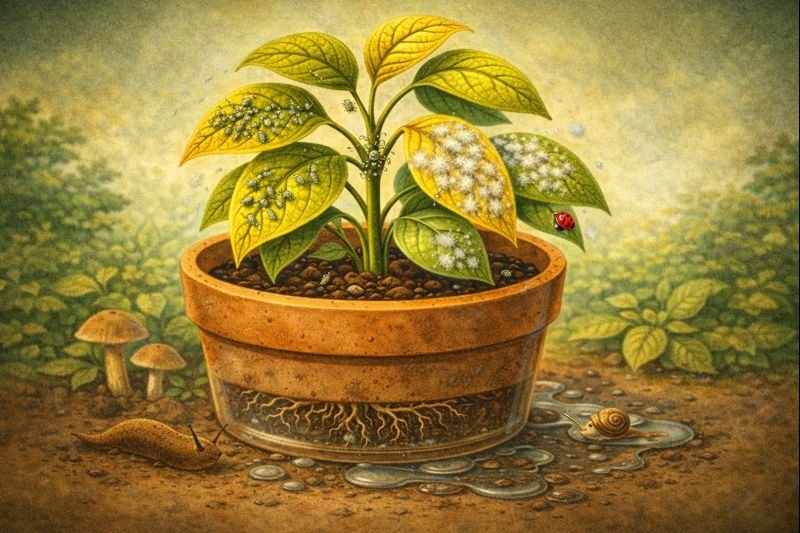
Each plant has different light needs.
Low light plants still need light.
Bright light plants still hate harsh sun.
Emotional Reality
Many beginners blame themselves when plants don’t grow, but the real problem is often poor light, not poor care.
5. Changing Plant Position Too Often
When beginners see a plant struggling, they panic.
They move it:
- From one room to another
- Near the window
- Away from the window
- Near the door
- Back again
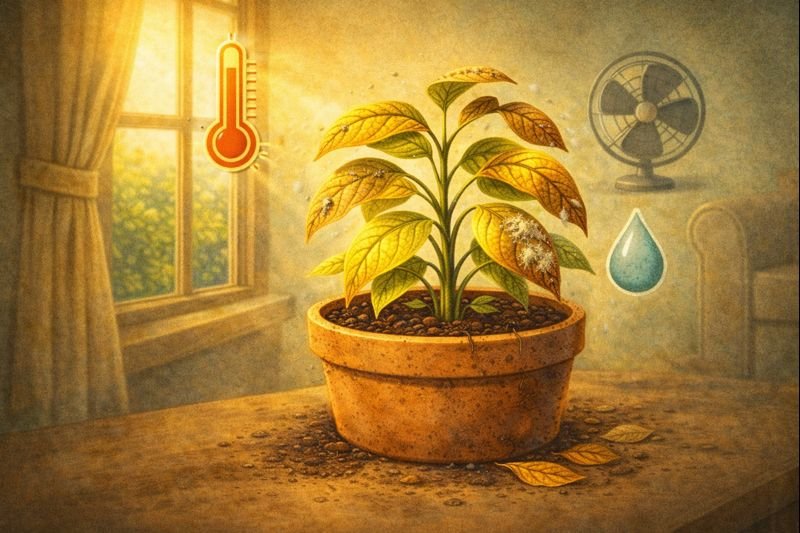
Plants hate frequent changes.
Each move causes stress.
Too much stress slows growth and weakens the plant.
Gentle Advice
Once you place a plant in a good spot, give it time. Plants need stability to heal and grow.
6. Using the Wrong Soil
Many beginners use:
- Garden soil
- Very heavy soil
- Old reused soil
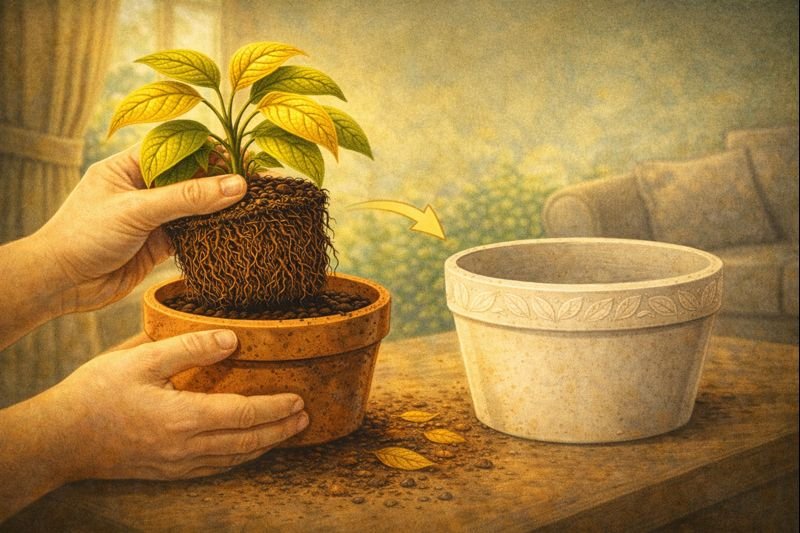
Bad soil causes:
- Poor drainage
- Weak roots
- Slow growth
Soil is not just dirt. It is the home of the roots.
Simple Truth
Healthy soil = healthy roots
Healthy roots = healthy plant
7. Overusing Fertilizer
Beginners often think fertilizer is magic.
They believe:
“More fertilizer will make my plant grow faster.”
In reality, too much fertilizer:
- Burns roots
- Damages leaves
- Stops growth
Plants need food, but only in small amounts.
Emotional Reminder
Plants grow slowly. Forcing growth usually causes harm.
8. Ignoring Early Warning Signs
Plants always give signals:
- Yellow leaves
- Brown tips
- Drooping stems
- Slow growth
Beginners often ignore these signs or hope the problem will fix itself.
Unfortunately, problems rarely fix themselves.
Caring Habit
When you notice a change, stop and observe. Early action saves plants.
9. Expecting Fast Results
This mistake breaks many hearts.
Beginners expect:
- New leaves every week
- Fast height growth
- Quick recovery
But many houseplants grow slowly.
Slow growth does not mean failure.
It means the plant is adjusting.
Emotional Truth
Gardening teaches patience. Plants grow in their own time, not ours.
10. Giving Up Too Quickly
The final mistake is giving up.
When a plant struggles, beginners feel:
- Frustrated
- Sad
- Discouraged
They stop trying or avoid plants altogether.
But every experienced gardener has killed plants in the beginning.
Important Reminder
Killing a plant does not make you bad at gardening.
It makes you a beginner who is learning.
How to Avoid These Mistakes as a Beginner
Here are simple habits that really help:
- Check soil before watering
- Give proper light
- Use pots with drainage
- Keep plants in one place
- Be patient
Small changes make a big difference.
Frequently Asked Questions
Do all beginners kill plants?
Almost everyone does at first. It is part of learning.
Can a plant recover after mistakes?
Yes, many plants recover once the problem is fixed.
Should beginners stop buying plants?
No. Start slow, learn, and grow confidence.
Final Thoughts: Be Kind to Yourself and Your Plants
Houseplants do not need perfect care.
They need understanding, patience, and consistency.
If you have lost plants before, do not feel ashamed. Every healthy plant you see today belongs to someone who once made mistakes too.
Gardening is not about being perfect.
It is about learning, observing, and growing — together with your plants.