
Introduction
Brown edges on plant leaves don’t show up overnight.
They come slowly. Quietly. Almost politely.
I remember the first time I noticed them. It was early morning. Living room still half dark. Fan running slow. I was standing there with a cup of chai, not fully awake. I glanced at my plant near the sofa and felt something was off. From far, it looked green. Normal. But when I bent down, I saw it. Thin brown lines along the leaf edges. Dry. Rough.
That moment always hits a little hard. Because you know you didn’t ignore the plant. You watered it. You placed it nicely. You even wiped the leaves once in a while. So why this?
Most people think brown edges mean the plant is dying. Honestly, that’s not true in most cases. It usually means the plant is uncomfortable. Living room indoor plants are very sensitive. Small changes affect them more than we realize.
In 2026, homes are different. AC runs longer. Windows stay shut. Air doesn’t move much. Plants are used as decor pieces. Corners, shelves, near TV units. And yes, many of us choose the best indoor plants hoping they will “just adjust.”
But plants don’t adjust silently. They show signs. Brown edges are one of the first.
In this blog, I’m not going to scare you. I’m not going to throw rules at you. I’ll talk the way I wish someone had talked to me years ago. Slow. Honest. From experience.
Let’s understand why this happens and how to fix it, one real reason at a time.
Living Room Indoor Plants and Dry Air That Slowly Damages Leaves
Dry air is the most common reason for brown leaf edges. And it’s also the most ignored.
I learned this the hard way during one winter. Everything felt perfect to me. Warm room. Heater on. Curtains closed. My living room felt calm. Comfortable. But my plants were quietly suffering.
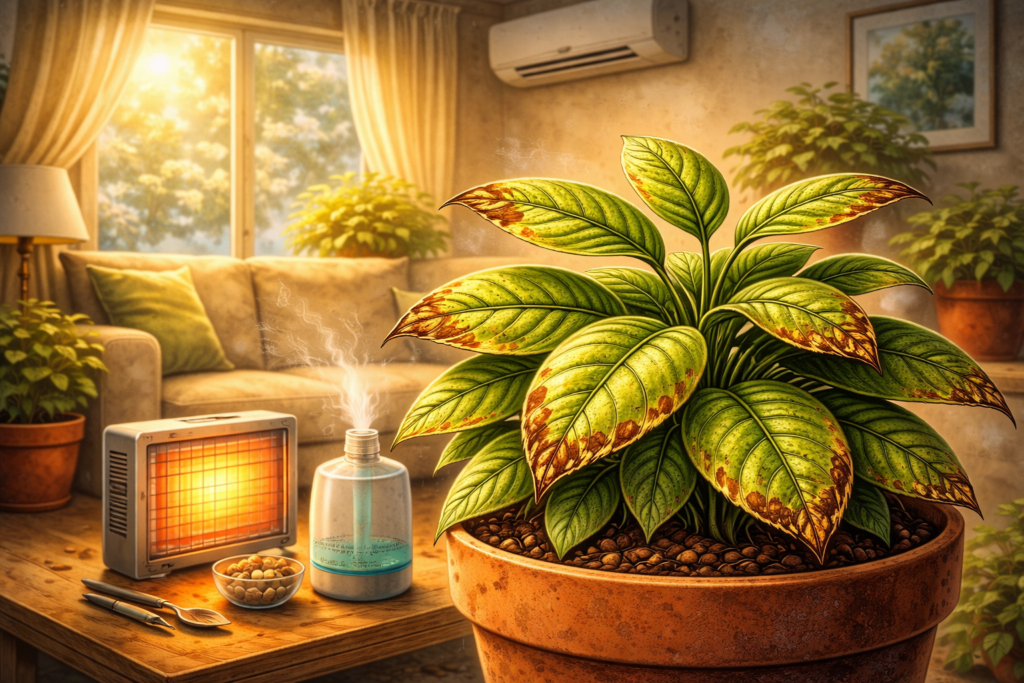
When air is dry, living room indoor plants lose moisture faster through their leaves. The edges dry out first. Not the middle. Just the tips. That’s why the plant still looks “okay” at first.
I remember touching one leaf edge and feeling how thin it had become. No softness. Just dryness. When I trimmed it, there was that faint cracking sound. You don’t forget that sound.
Signs dry air is the problem:
- Brown edges but green leaf center
- Leaves feel crisp at the tips
- Soil still feels moist
What helped me:
- Keeping a bowl of water near plants
- Grouping plants together
- Opening windows for fresh air daily
Pros:
- New leaves came out smoother
- Old leaves stopped getting worse
Common mistake:
Watering more. Dry air has nothing to do with soil moisture.
If your living room indoor plants sit near AC or heaters, dry air is almost always part of the issue.
Living Room Indoor Plants and Overwatering That Looks Like Care
Overwatering comes from love. I truly believe that.
I used to water my plants regularly. Same day. Same amount. I felt responsible. But slowly, brown edges started appearing. I couldn’t understand why.
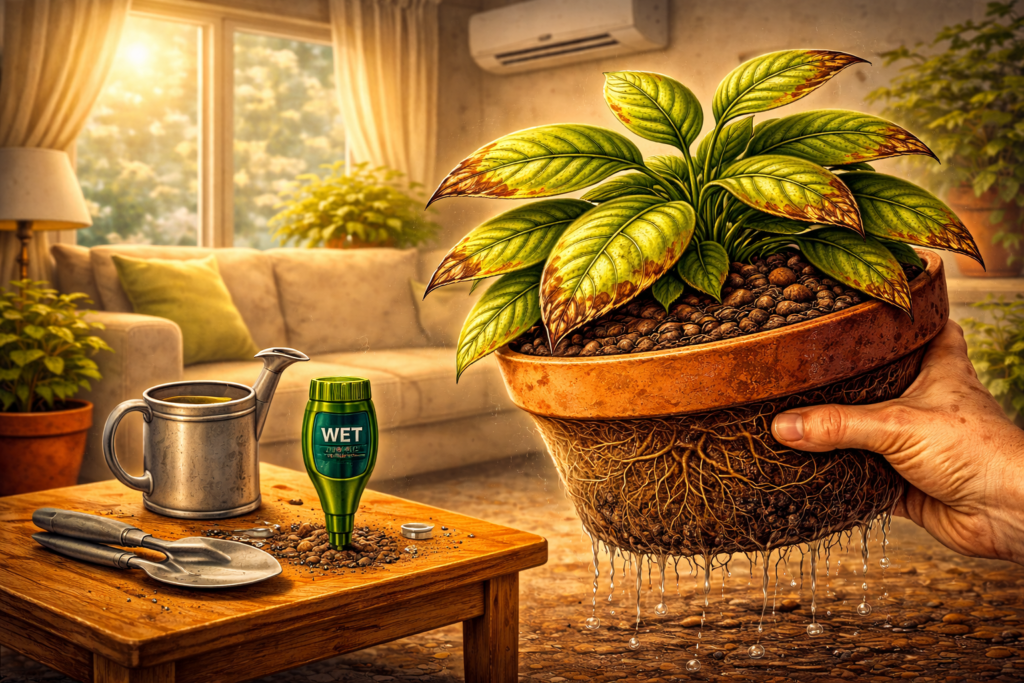
One day, I lifted the pot. It felt heavy. Too heavy. The soil smelled off. Not earthy. Slightly sour. That smell tells you the roots are struggling.
Overwatered roots can’t breathe. When roots can’t breathe, leaves don’t get what they need. The edges dry out first.
Signs overwatering is the issue:
- Soil stays wet for days
- Leaves feel soft, not firm
- Brown edges appear slowly
What I changed:
- I stopped watering on a schedule
- I checked soil with my finger every time
- I watered slowly and less often
Living room indoor plants dry much slower than outdoor ones. Air movement is low. Sunlight is softer.
This is where many people fail with indoor plants care. They water based on habit, not observation.
Living Room Indoor Plants and Old Soil That Can’t Support Growth
Soil doesn’t stay healthy forever. It gets tired.
I once kept a plant in the same soil for almost three years. I cleaned the leaves. Watered carefully. Still, brown edges kept showing up.
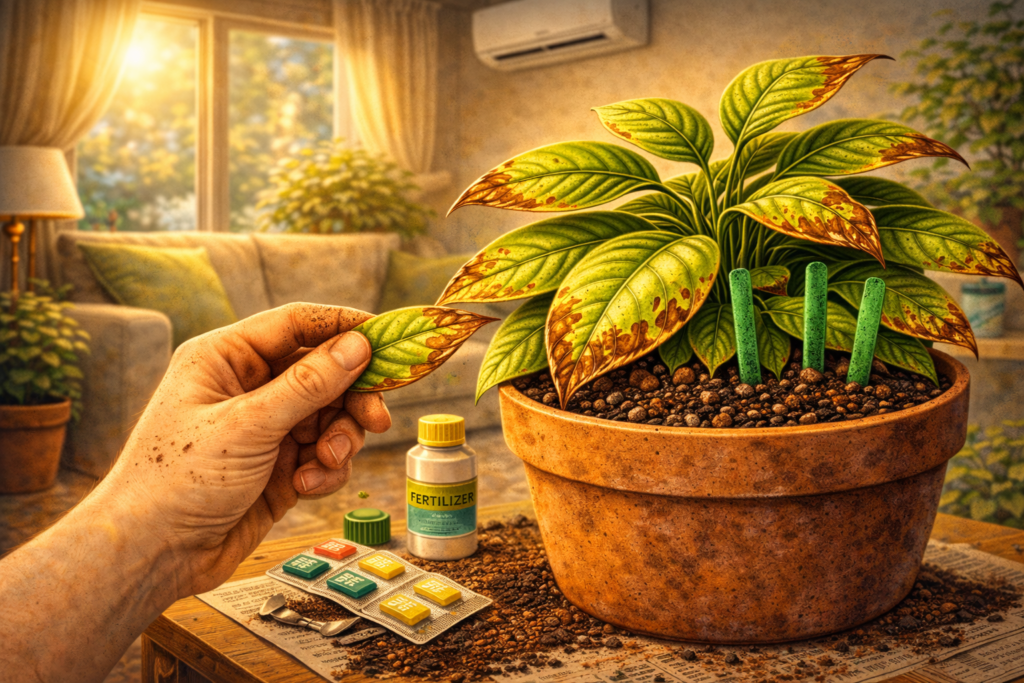
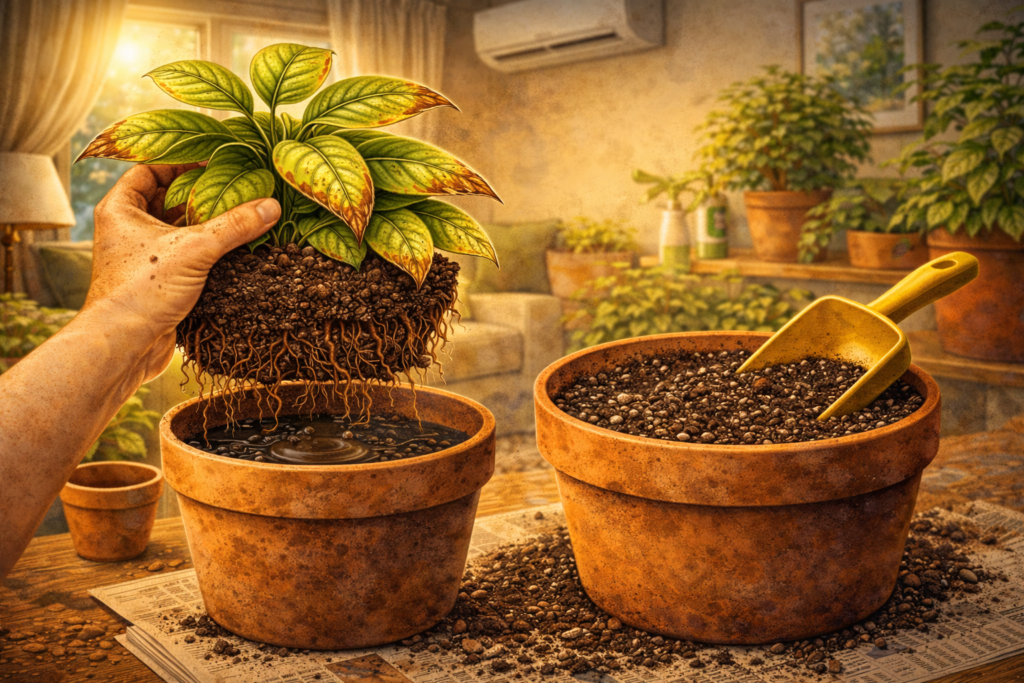
When I finally changed the soil, I understood. It had become heavy. Mud-like. No smell. No life.
Living room indoor plants depend completely on the soil you give them. There’s no rain. No insects. No natural refresh.
Signs soil is the issue:
- Brown edges despite good watering
- Slow or no growth
- Soil feels dense
What helped:
- Changing top soil every few months
- Full repotting every 1–2 years
- Using light, airy soil
Fresh soil smells good. That smell matters.
This simple change improved not just leaf health, but overall plant strength.
Living Room Indoor Plants and Light Stress from the Wrong Spot
Light can help. Light can hurt.
I once placed a plant right next to a window because I thought more light would help. Morning sun was fine. Afternoon sun wasn’t. Within days, brown edges appeared on the side facing the window.
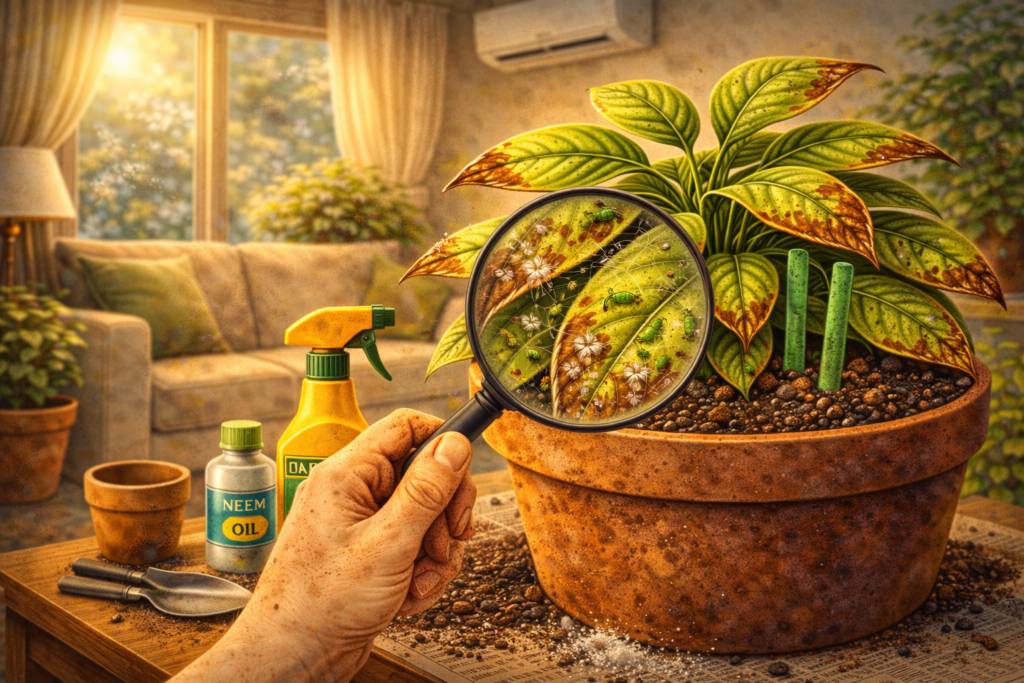
Living room indoor plants prefer gentle light. Not harsh heat.
Signs light stress is happening:
- Brown edges only on one side
- Leaves facing window affected more
- Soil drying too fast
What I did:
- Moved the plant a little away
- Used light curtains
- Rotated the pot weekly
Low light can also slow growth, but harsh light burns edges much faster.
If you’re growing the best indoor plants, placement matters more than people think.
Living Room Indoor Plants and Poor Drainage That Suffocates Roots
This is very common in decorated homes.
Beautiful pots often don’t have drainage holes. I’ve made this mistake myself. The pot looked great. The plant didn’t.
Without drainage, water stays trapped. Roots rot slowly. Leaves show stress quietly.
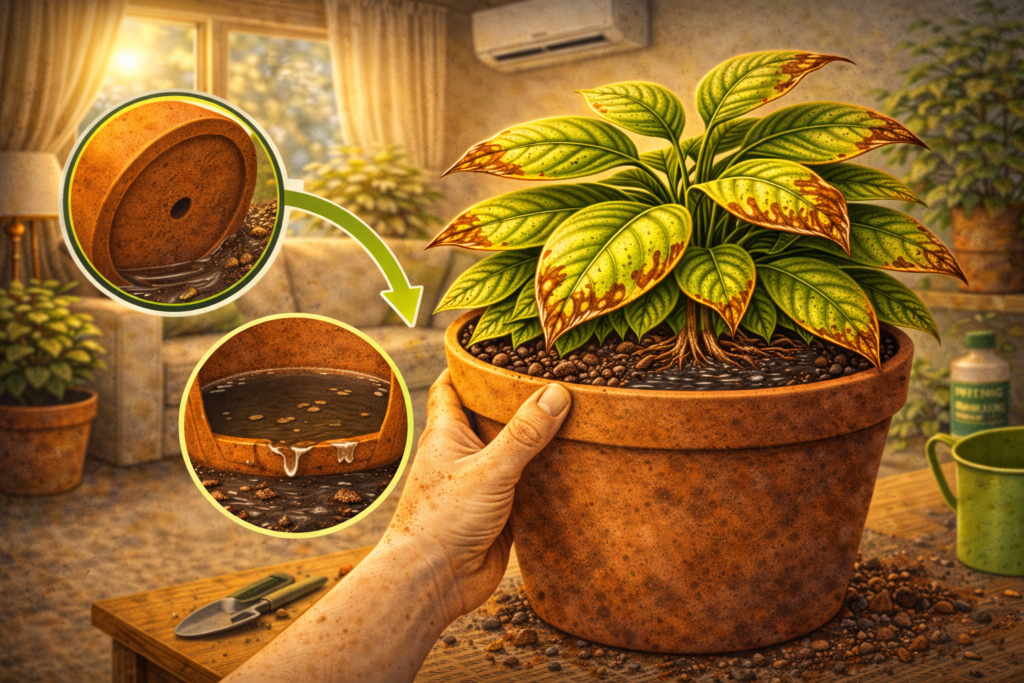
I remember tipping a pot one day and muddy water came out. Days after watering. That moment changed how I choose pots.
Signs drainage is the issue:
- Soil smells bad
- Leaves brown at edges and yellow later
- No new growth
Fix:
- Always use pots with holes
- Empty trays after watering
- Avoid heavy soil
You can also check out my post on snake plant care if drainage confuses you.
Living Room Indoor Plants and Fertilizer Burn from Overfeeding
More food doesn’t mean more growth.
I once fed a plant every week, thinking I was helping. Instead, leaf tips burned badly.
Living room indoor plants need very little feeding. Overfeeding causes salt build-up, which burns leaf edges.
Signs fertilizer is the issue:
- Brown tips after feeding
- White layer on soil
- No improvement
What I do now:
- Feed lightly
- Only during active growth
- Skip feeding if plant looks stressed
This applies even to houseplants that are considered easy.
Living Room Indoor Plants and Water Quality You Don’t Notice
Tap water can be harsh.
I noticed improvement when I started letting water sit overnight before using it. The change wasn’t dramatic, but it helped.
Signs water quality matters:
- Brown edges on sensitive plants
- Soil crust forming quickly
Fix:
- Use room temperature water
- Let water rest before use
- Flush soil occasionally
Small habits matter in indoor plant decoration setups where plants stay long-term.
Living Room Indoor Plants and Natural Leaf Aging
Not every brown edge is a problem.
Older leaves age. They dry out. They fall. That’s normal.
I used to worry about every leaf. Now I look at the whole plant.
If:
- Only old leaves are affected
- New leaves look healthy
Then it’s just life.
Trim gently. Move on.
FAQ
Why do plant leaves turn brown at the edges?
Usually because of dry air, watering stress, old soil, or drainage issues.
Should I cut brown edges?
Yes, gently trim with clean scissors.
Can brown edges turn green again?
No, but new leaves can grow healthy.
Do all houseplants get brown tips?
Many do, especially indoors.
Is misting helpful for living room indoor plants?
Sometimes, but fresh air works better.
Conclusion
Brown edges don’t mean failure. They mean adjustment.
I’ve learned this slowly, over years of mistakes. Plants don’t need perfection. They need attention and patience.
Living room indoor plants respond to balance. Not overcare. Not neglect.
Change one thing at a time. Observe. Wait.
When new leaves grow without brown edges, it feels quietly satisfying.
If you’re trying to grow the best indoor plants, remember this: plants forgive quickly when treated kindly.