
A Simple Watering Guide for Beginners
Introduction: Watering Confusion Every Plant Lover Faces
If you have indoor plants, you have probably asked this question many times:
“How often should I water my indoor plants?”
Some people say water every day.
Some say water once a week.
Some say touch the soil first.
This confusion is very normal.
I remember when I started growing indoor plants, watering felt like the hardest part. I either watered too much and my plant suffered, or I watered too little and the plant looked dry and weak.
Over time, I learned one simple truth:
There is no fixed watering schedule that works for all plants.
Watering depends on many small things, and once you understand them, watering becomes easy and stress-free.
In this guide, I will explain how often to water indoor plants in very simple English. No technical words, no complicated rules. Just clear guidance that anyone can follow.
Why Watering Indoor Plants Is Not the Same for Everyone
Many beginners want a simple answer like:
- Water every 3 days
- Water once a week
But plants do not work like machines.
Indoor plants live in different conditions:
- Different light
- Different room temperatures
- Different pot sizes
- Different types of soil
That is why watering depends on conditions, not the calendar.
The Most Important Rule of Watering Indoor Plants
Before we go deeper, remember this:
Never water on a fixed schedule. Always check the soil first.
This one habit can save most indoor plants.
How to Check If Your Indoor Plant Needs Water
This is the easiest and safest method.
The Finger Test
- Put your finger about 1–2 inches into the soil
- If the soil feels dry, the plant needs water
- If the soil feels moist, wait
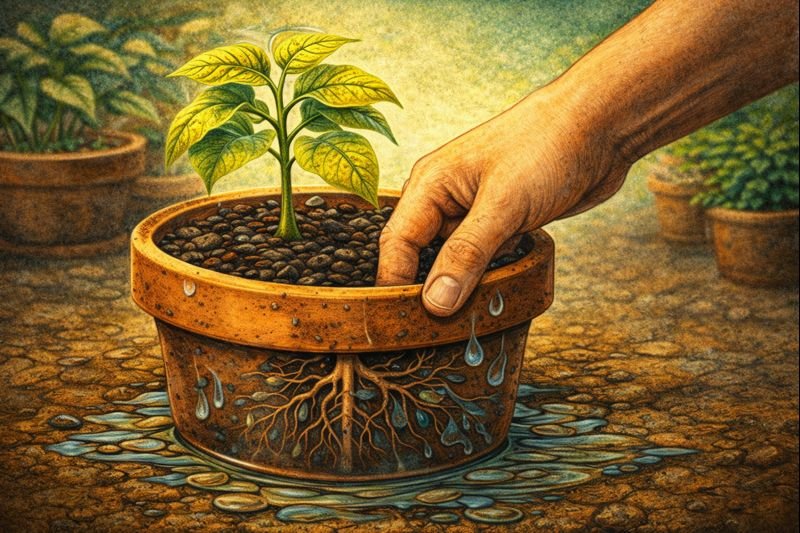
This simple test works for most indoor plants.
How Often Do Indoor Plants Usually Need Water?
Even though there is no fixed rule, we can still talk about general ranges.
Most indoor plants need water:
- Every 5–10 days
- Sometimes more in summer
- Sometimes less in winter
But this depends on many factors, which we will now discuss.
1. Light Conditions Change Watering Needs
Light plays a big role in how fast soil dries.
Bright Light
- Soil dries faster
- Plant uses more water
- Watering may be needed more often
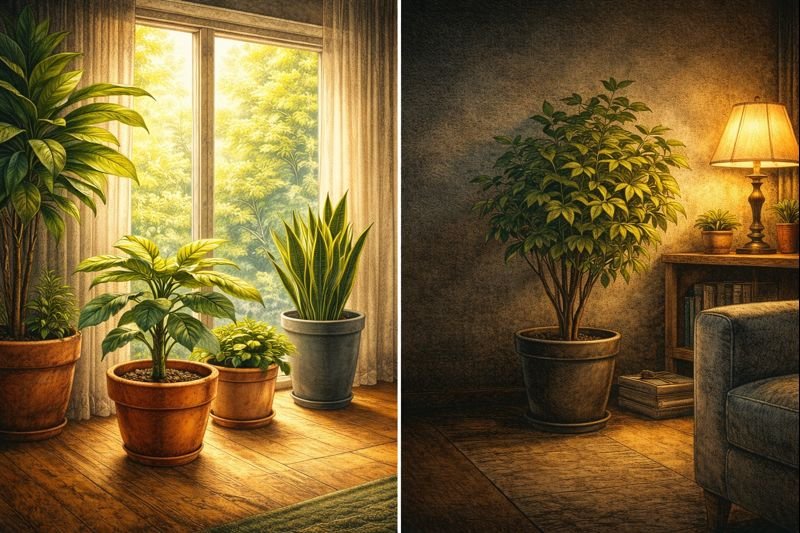
Low Light
- Soil dries slowly
- Plant uses less water
- Watering is needed less often
Plants near windows usually need water sooner than plants in darker corners.
2.Room Temperature and Air Flow
Warm rooms dry soil faster.
- Hot rooms mean more frequent watering
- Cool rooms mean less frequent watering
Air conditioners, heaters, and fans also dry the soil quickly.
If your plant is near:
- AC vents
- Heaters
- Windows with strong airflow
Check the soil more often.
3. Pot Size and Pot Type Matter a Lot
Small Pots
- Hold less soil
- Dry faster
Need watering more often
Large Pots
- Hold more soil
- Stay moist longer
Need watering less often
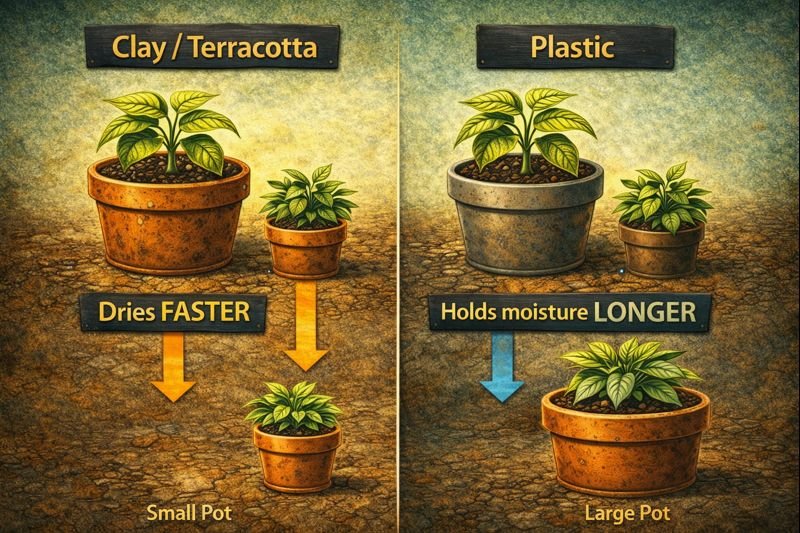
Pot Material
- Plastic pots hold moisture longer
- Clay or terracotta pots dry faster
Always consider the pot, not just the plant.
4. Soil Type Affects Watering Frequency
Not all soil is the same.
Loose, Well-Draining Soil
- Water flows easily
- Dries faster
- Safer for beginners
Heavy, Compact Soil
- Holds water for long
- Increases risk of overwatering
Good soil helps you water correctly without harming roots.
5. Different Plants Need Different Amounts of Water
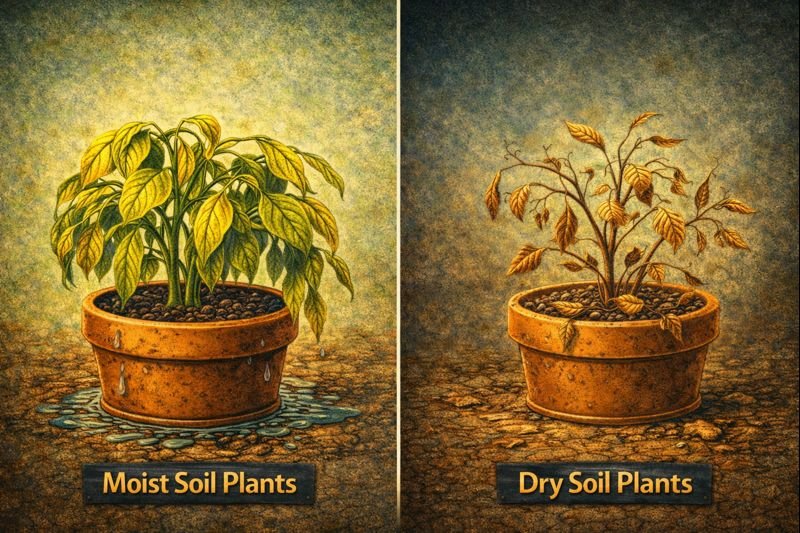
Some plants like moist soil.
Some plants prefer dry soil.
Plants That Like Slightly Moist Soil
- Peace lily
- Ferns
- Fittonia
These plants usually need water more often.
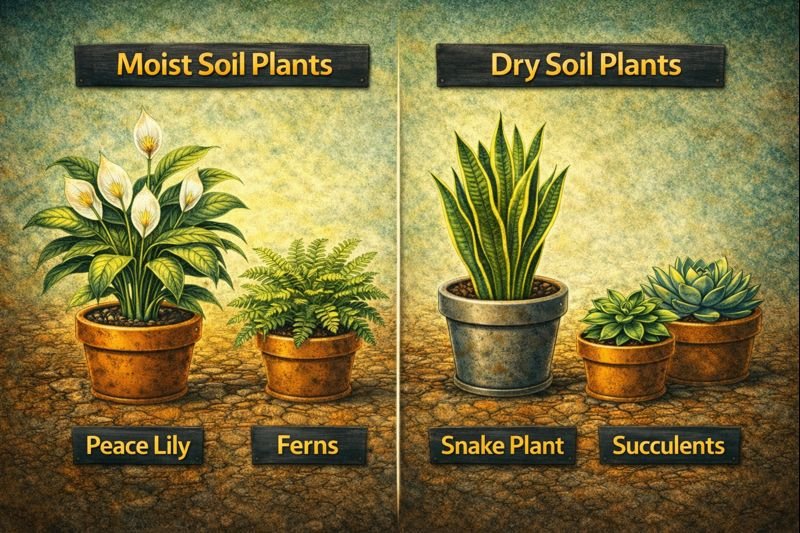
Plants That Like Dry Soil
- Snake plant
- ZZ plant
- Succulents
These plants need water less often and hate wet soil.
Signs You Are Watering Too Often
Overwatering is the most common mistake.
Signs of Overwatering
- Yellow leaves
- Soft or drooping stems
- Soil stays wet for many days
- Bad smell from soil
If you see these signs, reduce watering immediately.
Signs You Are Not Watering Enough
Underwatering also causes problems.
Signs of Underwatering
- Dry soil
- Crispy or curling leaves
- Brown leaf tips
- Plant looks weak
If this happens, water deeply and slowly.
How to Water Indoor Plants the Right Way
Watering correctly is just as important as watering on time.
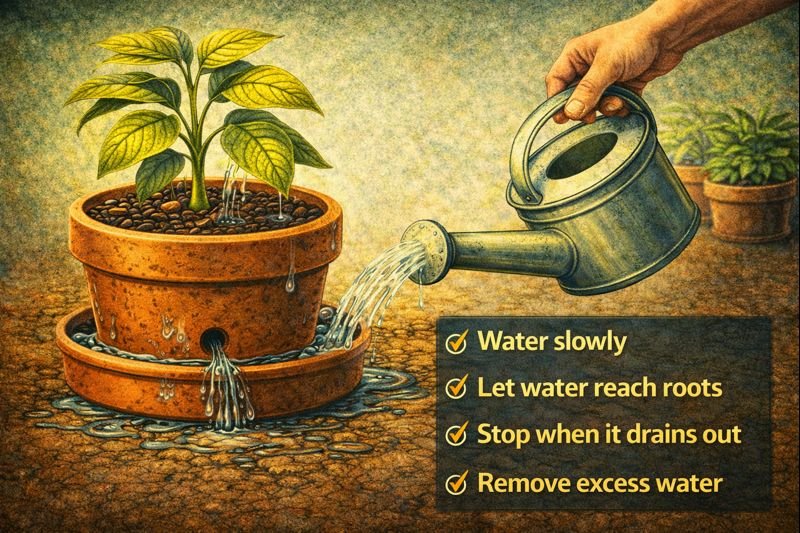
Correct Watering Method
- Water slowly
- Let water reach the roots
- Stop when water drains out from the bottom
- Empty excess water from the tray
Never let plants sit in standing water.
Morning or Evening: When Is the Best Time to Water?
For indoor plants:
- Morning is best
- Early evening is also fine
- Avoid watering late at night if possible.
Morning watering allows plants to use water throughout the day.
Seasonal Watering Guide for Indoor Plants
Summer
- Plants grow faster
- Soil dries quickly
- Water more often
Winter
- Growth slows
- Soil dries slowly
- Water less often
Many plants need half the water in winter compared to summer.
Common Watering Mistakes Beginners Make
Avoid these mistakes:
- Watering a little every day
- Watering without checking soil
- Using pots without drainage holes
- Using very cold water
Room-temperature water is best for plants.
A Simple Watering Routine for Beginners
If you are new to indoor plants, follow this routine:
- Check soil every 3–4 days
- Water only when top soil is dry
- Water deeply, not lightly
- Observe plant response
Plants will slowly teach you what they need.
Frequently Asked Questions (FAQ)
How often should I water indoor plants in summer?
Usually every 5–7 days, but always check soil first.
How often should I water indoor plants in winter?
Usually every 10–15 days, depending on soil and temperature.
Can I water all indoor plants the same way?
No. Different plants have different water needs.
Is misting a replacement for watering?
No. Misting helps humidity, not root watering.
Final Thoughts
Watering indoor plants does not need to be confusing.
Once you stop following fixed schedules and start listening to the soil and the plant, everything becomes easier.
Remember:
- Check soil, not the calendar
- Water deeply, not frequently
- Adjust watering with seasons
Healthy plants grow from simple, careful watering, not perfect routines.